How Much Should a Franchise Branch Spend on Marketing? A Practical Guide for New Franchisees
Summary
Best for: New franchisees planning a branch’s local marketing budget.
Fastest win: Find every marketing-related fee and minimum in your franchise documents before deciding what you can spend locally.
Simple rule: Separate required system payments from the money you choose to spend promoting your own branch.
Opening a franchise branch means learning a new set of costs and rules. Marketing can be confusing because some payments go to the franchisor, while other spending is up to you, and some local advertising may be required by your agreement.
There is no universal marketing budget that fits every franchise. Start with your contract, understand what each payment covers, then plan local marketing around the customers your branch needs.
Where the money goes in a franchise system
A franchisee is the person or business that owns and operates a branch under another company’s brand. The franchisor owns or manages the brand and gives franchisees permission to use its name, systems, and business model.
You may see four different kinds of payments. They do different jobs, so don’t treat them as one marketing budget.
| Bucket | What it is | Who decides it | What it buys |
|---|---|---|---|
| Franchise fee | Usually a one-time payment to join the franchise system. | Set by the franchisor and described in your agreement. | The right to open under the brand and any included opening support or services. |
| Royalties | Ongoing payments to the franchisor. They are often calculated as a share of sales, but the formula varies. | Set by the agreement. | Usually supports the brand and franchise system; it is not automatically local advertising money. |
| Brand or advertising fund | A required contribution to a shared marketing fund, sometimes based on sales. | Fund rules and the agreement explain who manages it and how it may be used. | May pay for national or regional advertising and other permitted expenses. It does not necessarily buy advertising specifically for your branch. |
| Local marketing spend | Money used to promote your branch in its own service area. Your contract may set a minimum. | The agreement and brand standards set the rules; you plan within them. | Local campaigns intended to attract customers to your branch. |
The franchise fee is not the same as a monthly marketing contribution. Royalties and shared-fund contributions are generally separate from what you spend locally. Your agreement may require local marketing in addition to both.
Your Franchise Disclosure Document (FDD) is a document the franchisor gives prospective franchisees before they buy. Three parts are especially useful when reviewing these costs:
- Item 5 covers initial fees, including certain payments due before opening.
- Item 6 lists other fees, which may include royalties, fund contributions, and other required payments.
- Item 11 describes franchisor support and the advertising program, including relevant marketing obligations.
The FTC’s franchise disclosure rule sets out what these items cover. Read the FDD along with your franchise agreement; the agreement explains your specific obligations.
How much should you spend locally?
Your first step is to find out whether your contract sets a local-marketing minimum. Some agreements use a fixed monthly amount; others use a percentage of sales. The calculation might be based on “gross sales,” “gross revenue,” or another term. Use the definition in your own documents, not an assumption.
You may see industry discussions cite ranges such as 2–6% of gross sales for local marketing. That is a broad reference, not a rule or a recommendation. Franchise systems and contracts vary, and the percentage alone does not tell you whether a separate shared-fund contribution is due.
Once you know the contract requirement, build the rest of your plan around your branch’s goals:
- Estimate how many new customers you need. Use your branch’s capacity and business plan. Avoid promising yourself a response level before you have results.
- Estimate what a customer is worth over time. Customer lifetime value means the revenue, or, more usefully, the gross profit, you expect from a customer over the full relationship.
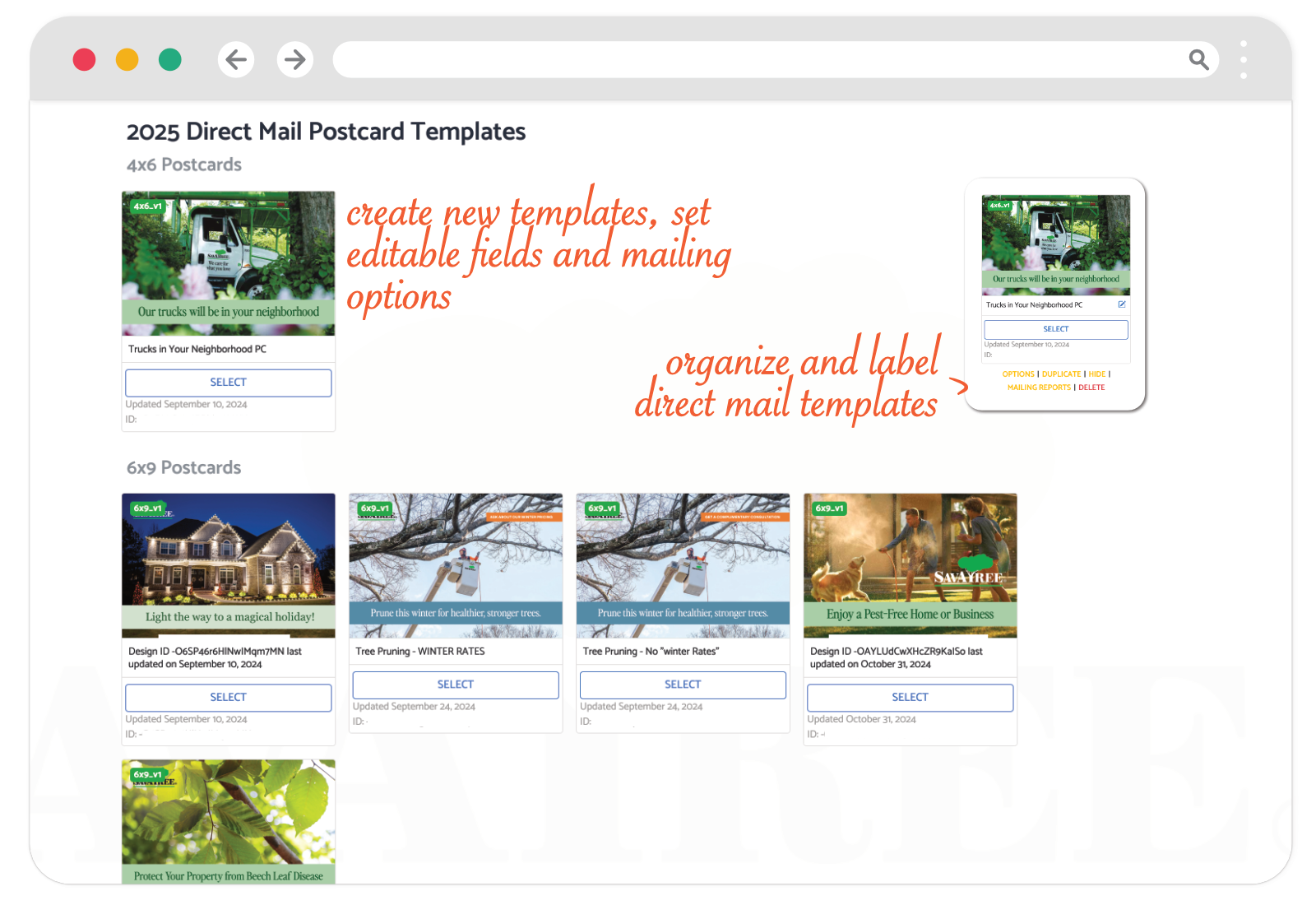
- Choose a local mailing plan you can repeat. Set an area, message, and mailing schedule that fit your branch’s service territory and brand standards.
- Decide how you will measure results. Set up a way to count calls, form requests, booked jobs, or sales tied to each campaign.
A simple monthly budget starts with your required local minimum, then adds any extra amount you can afford to test a campaign. Keep that extra amount within your cash-flow plan; sales can take time to arrive.
Watch for these beginner mistakes: Treating marketing as optional after one good month, spending the whole budget on one large campaign, or mailing without a way to record what happened.
Before setting a number, ask your franchisor what counts toward the local-marketing requirement. For example, does a targeted postcard campaign qualify? Are only certain designs or offers allowed? Do you need approval before mailing? Get the answer in writing.
A simple budget framework you can adjust
A 70/20/10 split can be a starting shape for your local-marketing budget. It is not a percentage of sales, a franchise rule, or a promise of results.
- 70%: Proven, repeatable mailings. Put most of your budget toward the local campaign plan you can run consistently and measure.
- 20%: Tests. Try one change at a time, such as a different nearby area, postcard message, or offer.
- 10%: Seasonal or special campaigns. Keep a small portion for timely local opportunities, when they fit the brand rules and your budget.
Think of the split as a planning tool, not a formula you must follow. If your branch is new and has no results yet, use small tests and adjust after you have evidence.
Give a campaign at least three months of planned activity before judging it, when the agreement and your cash flow allow. This gives you time to repeat the approach and gather more than a single snapshot. It does not mean you should keep funding a campaign that is clearly unaffordable or not being tracked.
Use this worksheet to plan. Fill in the expected result before you mail, then record what actually happened.
| Channel or campaign | Monthly amount | Expected result | How tracked |
|---|---|---|---|
| Targeted postcard campaign: ______ | $____ | ______ | ______ |
| Repeat mailing to the same area: ______ | $____ | ______ | ______ |
| Test: area, offer, or message: ______ | $____ | ______ | ______ |
| Seasonal campaign: ______ | $____ | ______ | ______ |
| Total local marketing | $________ |
Where targeted direct mail fits
Targeted direct mail means sending a physical marketing piece to selected addresses in a specific area. For a franchise branch, that can make local marketing easier to plan: you can choose neighborhoods within your service area, use a consistent message, and repeat a campaign to build recognition.
It can also support what customers see locally. If your crews, vehicles, or storefront are already visible in an area, a postcard can help introduce or remind nearby residents about your branch. That visibility is useful context, not a guarantee of new business.
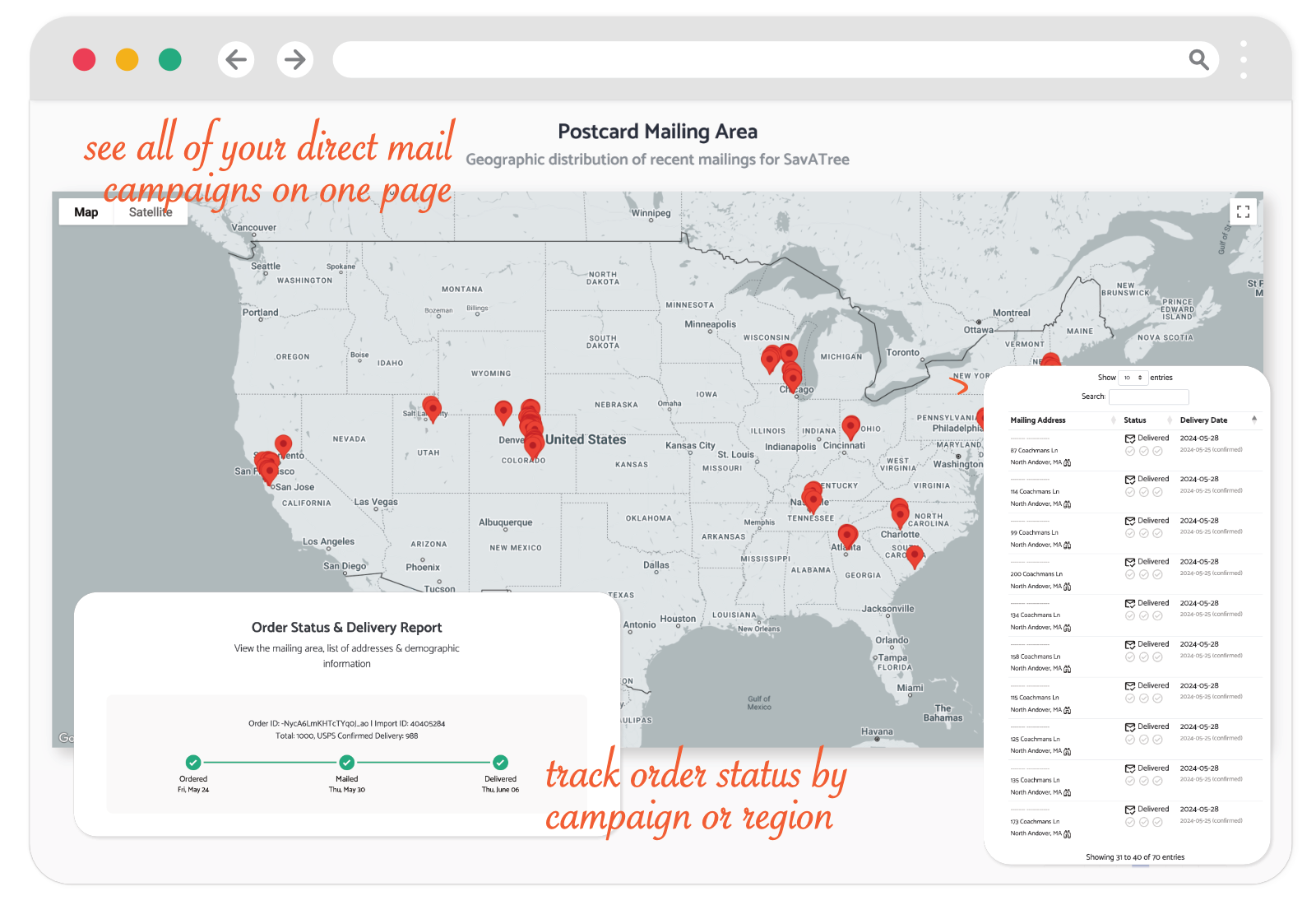
A franchise brand portal is an online ordering system that may provide approved designs, brand files, and campaign reporting. It can help branches follow brand standards while carrying out local campaigns. But the portal’s ordering process and the branch’s marketing budget are separate questions. Understand who sets the design and vendor rules, what the complete order costs, and what reporting you receive.
For a plain-English look at how portal fees and incentives can affect a branch’s marketing budget, read Enterprise Direct Mail and Brand Portals: What Franchise Brands Should Look For (and What to Avoid). A portal should be judged by what it helps your branch accomplish, not only by how simple it makes placing an order.
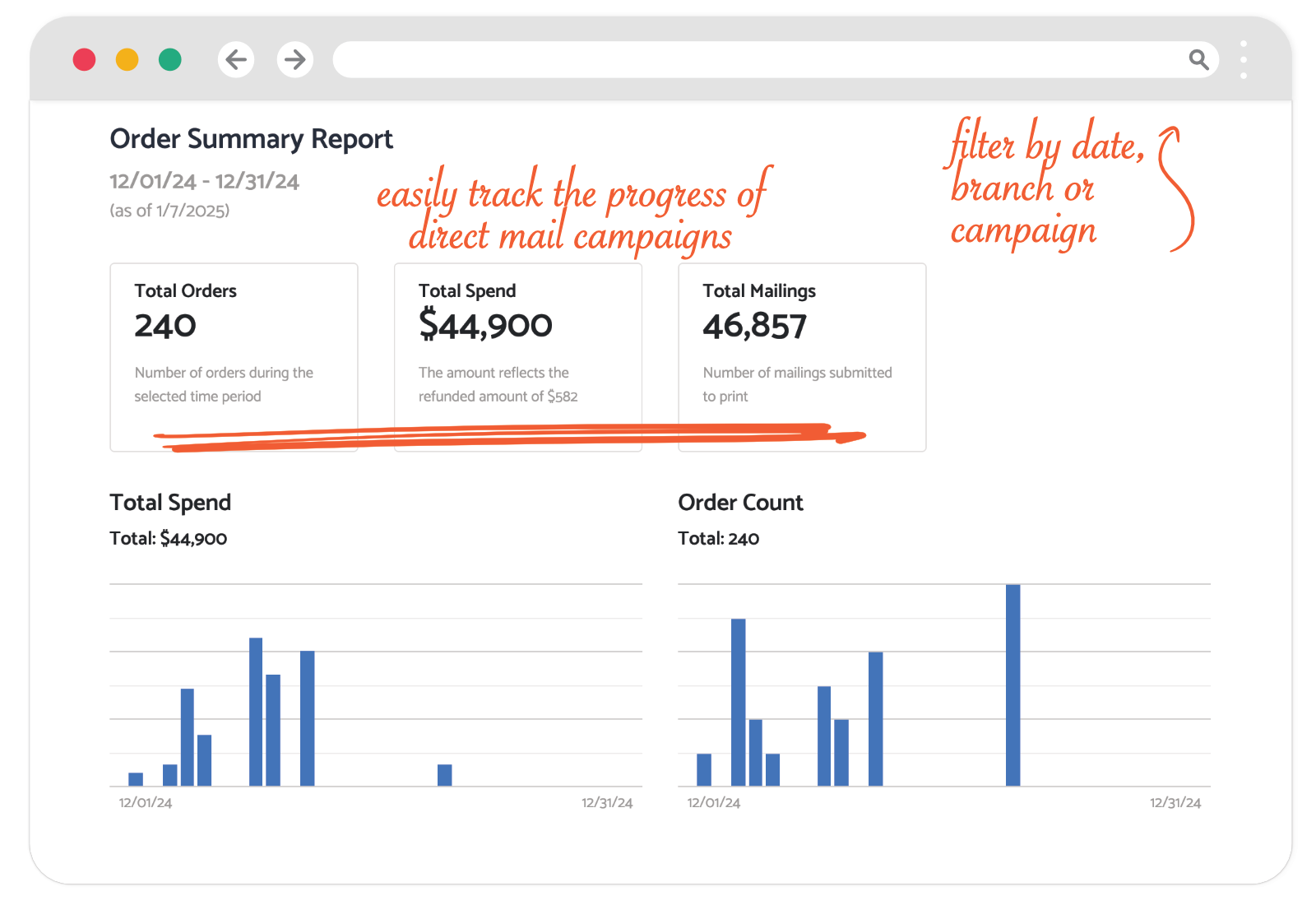
When comparing campaign options, look beyond cost per order: the amount paid to place a campaign. Also measure cost per customer: the campaign’s total cost divided by the number of new customers it generated. A lower order cost is not necessarily a better outcome if the campaign brings in fewer customers.
For brands that want consistent templates, branch-level reporting, and locally selected mailing areas, the Neighborhood Postcards enterprise platform is one option to review. Ask any provider, including Neighborhood Postcards, to explain its complete fees and incentive structure in writing.
Track results from day one
Keep tracking simple enough that you will actually do it. Before each campaign, write down the mailing area, date, message, and expected result. Then:
- Ask every new customer how they heard about your branch. Record the answer, even if they found you another way after seeing a postcard.
- Use a campaign-specific response method when possible, such as a unique phone number, QR code, or web page.
- Review the results monthly. Count responses, qualified leads, new customers, and campaign cost.
- Change one thing at a time. Repeat or adjust the area, message, or offer based on what the records show.
For a simple tracking setup and definitions of the key numbers, see Direct Mail Marketing ROI: How to Track Calls, Leads, and Sales from Every Postcard.
At the end of your first 90 days, compare actual results with your plan. Keep what is affordable and showing promise, improve what is hard to measure, and pause what does not fit your branch’s goals. Bring your records to your franchisor or accountant if you need help interpreting them.
Franchise requirements differ. Review your current FDD, franchise agreement, and brand standards. Ask a qualified franchise attorney or accountant for legal or accounting advice specific to your situation. The FTC’s guide to franchise disclosure documents explains how to use the FDD as part of your review.
Frequently asked questions
- Does paying into the brand fund cover my local marketing requirement? Not necessarily. Your agreement may require both a shared-fund contribution and separate spending in your local area. Check the exact wording.
- Should I use a percentage of sales to set my budget? Use a percentage only if your contract requires one or as a planning reference, not as a universal rule. First confirm the contract’s minimum and how it defines sales.
- Can I choose any postcard design or mailing provider? Not always. Your brand standards or agreement may require approved designs, vendors, or advance approval. Confirm the rules before ordering.
Final Recommendation
Ready to win more customers with less pressure?
Start with your franchise agreement and FDD, not a generic budget percentage. Separate system fees from local marketing, plan a repeatable targeted-mail campaign you can afford, and track the customers it brings in.
For questions to ask about how brand-portal economics may affect your branch, read Explore Neighborhood Postcards. When you’re ready, Explore Neighborhood Postcards.
Share your franchise type and the local-marketing requirements in your agreement, and we can suggest a more tailored starting plan.


