Enterprise Direct Mail and Brand Portals: What Franchise Brands Should Look For (and What to Avoid)
Summary
Best for: Franchise leaders evaluating a direct mail platform, required supplier, or brand portal. Fastest win: Ask for a written breakdown of every cost and payment connected to a typical branch order. Simple rule: Protect brand standards while making local campaigns transparent, measurable, and easy for branches to repeat.
A brand portal can help franchise teams launch local direct mail while keeping campaigns on-brand. But the ordering experience is only part of the decision. Franchisors should also understand who earns revenue from each order, what costs branches actually pay, and whether the platform makes local marketing easier to repeat.
The concern about revenue sharing is worth investigating, but it should not be assumed about every portal or provider. A franchisor, affiliate, or vendor may receive rebates, commissions, markups, or other consideration from required purchases. The key is to review the actual agreements and all-in costs. If an incentive makes each branch campaign more expensive, it can make local marketing harder to justify, and may work against stronger branch and system-wide growth.

Traffic: Why franchise brands adopt brand portals
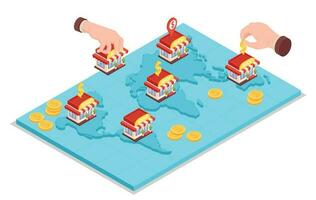
A franchise system may have dozens or hundreds of locations, each with local marketing needs. Without a shared process, branches can create inconsistent materials, use old offers, or spend time asking corporate for basic updates.
A brand portal can provide approved templates, controlled editing, and a central place to order. Corporate teams can set brand rules while local teams customize practical details such as location information, service areas, and campaign timing.
The goal is not to control every local decision. It is to make the right decision easier: give branches a reliable path to reach nearby customers while keeping the brand recognizable. A good portal should reduce friction, not become another layer that makes local marketing harder to launch.
Consideration: The fee you may not see in a branch order
A portal can look simple while its economics are not. Depending on the agreements, a franchisor, affiliate, or vendor may receive a commission, rebate, markup, or other benefit tied to franchisee purchases. A payment may come from the branch, the supplier, or another part of the arrangement. So the right question is not only “What does the portal cost?” but “Who receives what, and how does it affect the branch’s all-in cost?”
Under the FTC Franchise Rule, FDD Item 8 addresses required purchasing and sourcing obligations. It calls for disclosure of certain information when the franchisor or an affiliate may receive revenue or other material consideration from required purchases, including the basis for supplier payments. Item 11 separately addresses advertising programs and funds. These disclosures are not necessarily a transaction-by-transaction explanation of every portal order or a record of how every dollar is spent. Review the FDD, agreements, and actual purchasing process together. The FTC’s franchise buying guide and 16 CFR § 436.5 are useful starting points. This is general information, not legal advice; consult franchise counsel about specific disclosure obligations.
The incentive chain is possible, not automatic: if a revenue share is reflected in higher order costs, branches may find campaigns less affordable and order less often. That can reduce local marketing activity and limit opportunities for branch growth. If repeated across a system, weaker local activity may also affect overall sales and brand momentum. On the other hand, some co-op programs use central funds to reimburse or subsidize local campaigns. The issue is not the portal itself; it is whether the economics and benefits are transparent and aligned.
| Model | Who pays? | Who benefits when order volume rises? | Incentive effect |
|---|---|---|---|
| Aligned | Branch pays a clear, competitive all-in cost; any co-op support is documented. | Branches and the system benefit when useful campaigns support local growth. | Encourages repeatable, measurable local marketing. |
| Potentially misaligned | Branch pays an unclear or inflated all-in cost. | A party earns more from higher spend, without a clear link to branch outcomes. | Can make branches more cautious about ordering. |
High intent: What to look for in an enterprise direct mail platform
A useful enterprise platform should make both corporate oversight and branch execution straightforward. Evaluate capabilities and economics together:
- Transparent costs: Ask for an itemized view of printing, postage, platform fees, creative charges, and any commission, rebate, or other compensation connected to orders.
- Clear incentive structure: Find out whether the franchisor, affiliate, or vendor earns more when branch order volume or spend increases.
- Local targeting control: Branches should be able to select relevant neighborhoods and service areas, with sensible corporate guardrails.
- Branch-level visibility: Corporate teams should be able to review spend, order history, and campaign activity by user or location.
- Trackable campaigns: Look for order status, delivery information, and reporting that helps teams compare campaign activity.
- Workflow and CRM fit: Check whether the platform supports the data import, export, or CRM workflows your system actually uses.
- Flexible volume: Make sure branches can run a small test or scale a successful campaign without arbitrary limits.
- Predictable operations: Confirm timelines, notifications, support, and the process for handling errors or reprints.
Avoid choosing a portal based on a polished interface alone. If its reports cannot show branch-level spend or its contract does not explain the economics, corporate may have little ability to assess whether the system is working well for local operators.
Product intent: Brand portal features that help branches
The most useful portal features remove routine work while preserving local relevance. Look for pre-approved templates, editable fields with clear limits, current brand assets, address validation, exclusion-list support, order notifications, and consolidated reporting or invoicing. Corporate users may also need permissions, approval steps, and a way to retire outdated creative.
Neighborhood Postcards’ enterprise platform describes pre-approved templates, campaign reporting by user, CRM import and export, notifications, and flexible volume. The company also shares a SavATree testimonial about streamlining ad-hoc local direct mail requests with street-level targeting. These are useful capabilities to evaluate in a demo; they are not a substitute for reviewing the provider’s pricing and compensation terms. Ask any provider, including Neighborhood Postcards, to explain its complete fee and incentive structure in writing.
Purchase intent: A practical evaluation checklist
Before selecting a platform or making it the required ordering channel, ask:
- What purchases must branches make through this supplier or portal, in practice as well as in the contract?
- Does the franchisor, an affiliate, or the vendor receive commissions, rebates, markups, discounts, or other benefits?
- How is each benefit calculated, who pays it, and who receives it?
- What is the complete cost of a typical branch order, including production, postage, fees, and optional services?
- How does that all-in cost compare with a suitable independent alternative?
- Can a branch see its own order history and spend without relying on corporate?
- Can corporate report activity and spend by branch, user, campaign, and period?
- What targeting, template, and approval choices remain under branch control?
- If a marketing fund or co-op supports local mail, what are the eligibility, documentation, and reimbursement rules?
- Can the system pilot with a few locations, export campaign data, and transition cleanly if the relationship ends?
A practical rollout starts with a small pilot across branches with different markets or operating conditions. Agree on what to measure before launch: total campaign cost, time to place an order, quantity mailed, delivery information, response tracking, and branch feedback. Compare results with an appropriate baseline, then adjust the process before expanding.
If the franchise system has required purchasing or advertising-fund rules, have legal and accounting advisors review the FDD, contracts, and actual payment flows. The goal is not to presume wrongdoing. It is to make sure disclosures, agreements, and day-to-day economics are clear and consistent.
Frequently asked questions
- Does revenue sharing always mean a branch pays more? Not necessarily. The impact depends on who pays the commission or rebate, how the supplier sets prices, and whether savings or co-op support flow back to branches. Compare complete costs and ask for the terms in writing.
- Is a brand portal a problem for franchisees? No. A well-designed portal can make ordering and brand compliance easier. Evaluate the costs, branch control, reporting, and incentives alongside the interface.
- Does an FDD show exactly how every portal payment is spent? Not necessarily. FDD disclosure requirements depend on the arrangement and applicable law. Review relevant items and agreements with franchise counsel rather than treating a single disclosure as a full transaction ledger.
Final Recommendation
Ready to win more customers with less pressure?
Choose an enterprise direct mail portal that protects brand consistency without obscuring branch costs or making local campaigns cumbersome. Ask for the complete economics, check what branches can see and control, and pilot the system before a broad rollout.
Explore Neighborhood Postcards or Request a Demo to discuss enterprise direct mail workflows.
What are 1–2 details about your franchise system (such as the number of branches or how local orders work today) that would help us tailor a recommendation?